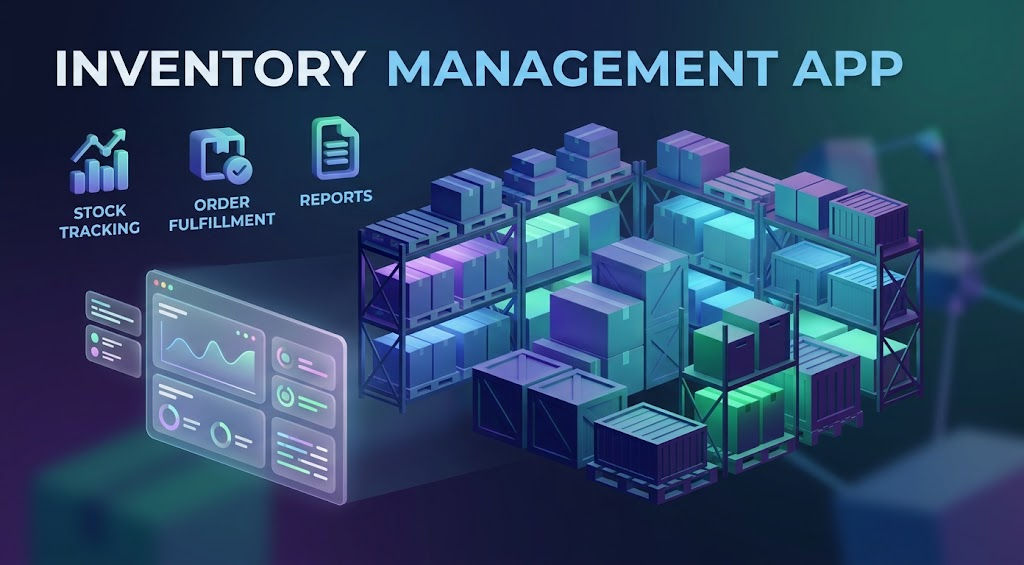
Running out of stock at the wrong moment, or discovering a storeroom full of items nobody ordered, is one of the fastest ways to lose money in retail, e-commerce, or manufacturing. As businesses scale past spreadsheets and manual counts, the gap between what’s on the shelf and what’s on paper only grows wider. That’s the exact problem an inventory management app is built to close.
What an Inventory Management App Actually Does
At its core, this kind of software tracks stock levels, orders, sales, and deliveries in real time. Instead of relying on someone physically counting boxes or updating a spreadsheet at the end of the day, the app keeps a live record that updates the moment a sale happens or a shipment arrives.
For small teams, this might mean simply knowing what’s in stock without guesswork. For larger operations with multiple warehouses or sales channels, it means syncing data across locations so nobody oversells a product that’s already gone, or reorders something that’s sitting untouched in a back room.
The Core Features Worth Looking For
Not every app is built the same way, and the right fit depends on the size and complexity of the business. That said, a few features tend to separate the useful tools from the ones that just add another login to manage:
- Real-time stock tracking across every sales channel and warehouse
- Automated reorder alerts so nobody discovers a shortage after it’s already a problem
- Barcode or SKU scanning for fast, accurate counts
- Reporting and forecasting to spot slow-moving stock or seasonal demand
- Integration with existing tools, like point-of-sale systems, accounting software, or online storefronts
A platform like Skyware Inventory is built around exactly this combination — giving businesses a single, live view of their stock instead of piecing together information from separate spreadsheets and manual reports.
Why Manual Tracking Falls Apart Over Time
Spreadsheets work fine when a business is small enough that one person can hold the whole inventory picture in their head. The trouble starts as soon as there’s more than one person entering data, more than one sales channel, or more than a handful of SKUs to track.
Errors creep in. A number gets typed wrong, a sale doesn’t get logged in time, or two people update the same file and overwrite each other’s work. None of these mistakes are dramatic on their own, but they add up into a picture of inventory that no longer matches reality. That mismatch is what leads to stockouts, overstocking, and orders that can’t be fulfilled.
The Case for Switching to Dedicated Software
An inventory management app removes most of that manual guesswork. Instead of hoping the spreadsheet is accurate, teams can trust that the numbers reflect what’s actually happening in real time. This has a few knock-on effects worth mentioning:
Fewer stockouts and less overstocking. When reorder points are automated, the business doesn’t have to rely on someone remembering to check stock levels before they run out.
Better decision-making. Reports on what’s selling and what isn’t make it easier to plan purchasing, run promotions, or discontinue items that aren’t worth the shelf space.
Time saved on manual work. Counting stock by hand, updating spreadsheets, and cross-checking numbers between departments takes hours that could go toward actually running the business.
Fewer costly mistakes. Whether it’s a customer order that can’t be fulfilled or a warehouse full of unsold stock, inventory errors tend to be expensive. Cutting down on those errors protects the bottom line directly.
Choosing the Right App for Your Business
Not every business needs the same level of complexity. A single-location retailer might only need basic stock tracking and reorder alerts, while a business selling across multiple online marketplaces and physical stores needs something that can sync all of that in one place.
A few questions worth asking before choosing a platform:
- Does it integrate with the point-of-sale or e-commerce platforms already in use?
- Can it scale as the business adds more products, locations, or sales channels?
- Is the reporting detailed enough to actually inform purchasing decisions?
- How steep is the learning curve for the team that will use it daily?
Skyware Inventory is designed to answer these questions directly, offering a system that scales from a single storefront to a multi-warehouse operation without forcing a business to switch tools as it grows.
Final Thoughts
Inventory mistakes rarely announce themselves ahead of time — they show up as lost sales, wasted storage space, or a customer who never gets their order. An inventory management app doesn’t just fix that problem after the fact; it prevents it from happening in the first place by keeping stock data accurate and accessible in real time.
For any business that’s outgrown spreadsheets or is tired of chasing down stock discrepancies, a dedicated system like Skyware Inventory offers a practical way to get a clear, reliable picture of what’s actually on hand — and to keep it that way as the business keeps growing.