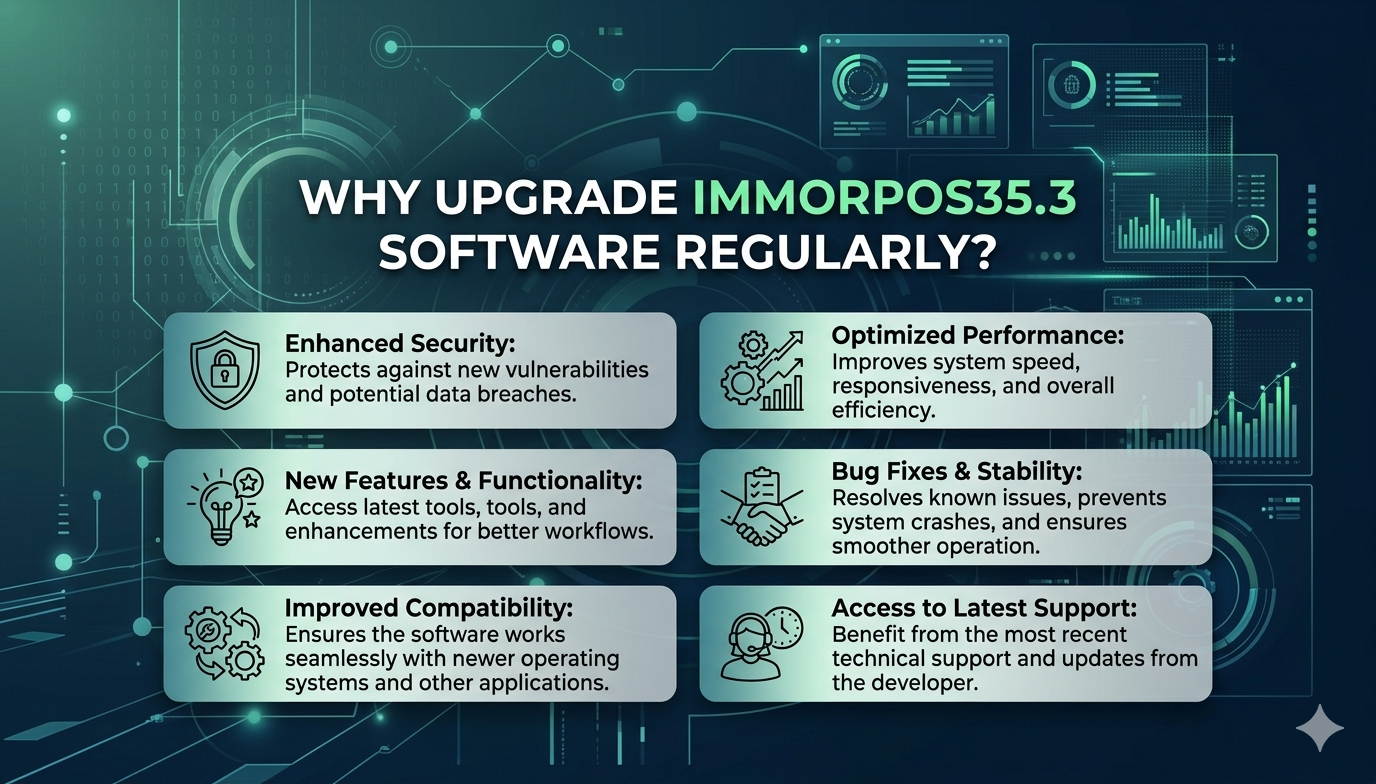
In modern organizations, software is no longer a background utility but a central pillar of productivity, security, and long-term growth. Every operational decision, from customer service to internal reporting, depends on digital systems functioning smoothly and securely. One question that repeatedly surfaces among decision-makers is why upgrade immorpos35.3 software regularly, especially when the current setup seems to be working fine. At first glance, delaying updates may appear cost-effective or convenient, but over time, this approach can quietly undermine efficiency, security, and competitiveness.
This article explores in depth the strategic, technical, and organizational reasons behind consistent software upgrades. Rather than focusing on abstract theory, it examines real operational benefits, hidden risks of stagnation, and the broader business implications of keeping systems current. By the end, readers will have a clear understanding of how regular upgrades contribute to stability, innovation, and sustainable success.
Understanding the Role of Software in Organizational Stability
Software systems act as the nervous system of modern enterprises. They connect departments, store critical data, and enable communication both internally and externally. When these systems lag behind current standards, the entire organization feels the strain. Asking why upgrade immorpos35.3 software regularly is essentially asking how to maintain operational stability in an environment that is constantly evolving.
Outdated software often struggles to integrate with newer tools or comply with updated industry standards. Over time, this leads to workarounds, manual processes, and inefficiencies that quietly drain resources. Regular upgrades ensure that systems remain aligned with current technologies, reducing friction and supporting smoother workflows.
Another key factor is predictability. Updated systems are generally more stable, having resolved bugs and performance issues identified in earlier versions. This reliability allows teams to plan with confidence, knowing that their tools will perform as expected under normal and peak conditions.
Security as a Moving Target
Cybersecurity threats evolve rapidly, and attackers continuously search for vulnerabilities in outdated systems. One of the strongest arguments for why upgrade immorpos35.3 software regularly lies in the realm of security. Software updates frequently include patches that close known vulnerabilities, making it significantly harder for malicious actors to gain access.
When organizations delay upgrades, they effectively leave known doors unlocked. Even if no breach occurs immediately, the risk accumulates over time. A single successful attack can lead to data loss, reputational damage, and regulatory consequences that far outweigh the perceived savings of postponing an update.
Regular upgrades also help organizations stay compliant with data protection regulations. As laws and standards change, software vendors adjust their products to meet new requirements. Staying current ensures that systems align with these expectations, reducing legal and operational risks.
Performance Improvements and Resource Optimization
Beyond security, performance is a major consideration. Each new software release typically includes optimizations that improve speed, reduce resource consumption, or enhance scalability. Understanding why upgrade immorpos35.3 software regularly means recognizing that performance gains are not always dramatic but are often cumulative.
Small improvements in processing speed or memory usage can translate into noticeable productivity gains across large teams. Tasks complete faster, systems respond more smoothly, and downtime caused by crashes or slowdowns decreases. Over months and years, these incremental benefits add up to substantial operational efficiency.
Resource optimization also plays a role. Updated software is often better optimized for modern hardware, allowing organizations to get more value from existing infrastructure. This can delay costly hardware upgrades and improve overall return on investment.
Supporting Innovation and New Capabilities
Innovation rarely happens in isolation. It depends on a foundation of tools that can support new ideas and approaches. One reason why upgrade immorpos35.3 software regularly is so important is that upgrades often unlock new features and capabilities that were not previously available.
These enhancements might include improved analytics, better user interfaces, or expanded integration options. When teams have access to modern tools, they are more likely to experiment, refine processes, and develop innovative solutions to business challenges.
Conversely, outdated systems can act as a brake on creativity. When employees are constrained by limited functionality or cumbersome workflows, they spend more time managing tools than solving problems. Regular upgrades remove these barriers and create an environment where innovation can flourish. why immorpos35.3 software implementations fail
User Experience and Employee Satisfaction
Software is ultimately used by people, and their experience matters. A key aspect of why upgrade immorpos35.3 software regularly involves improving usability and reducing frustration among employees. Modern software updates often focus on interface improvements, accessibility, and overall user experience.
When systems are intuitive and responsive, employees can focus on their core responsibilities instead of struggling with outdated interfaces. This not only boosts productivity but also contributes to higher job satisfaction. Over time, better tools can reduce burnout and improve retention by making daily tasks less stressful.
Training and onboarding also benefit from updated software. New employees are more likely to be familiar with modern interfaces and workflows, reducing the learning curve and accelerating their contribution to the organization.
Compatibility with Emerging Technologies
Technology ecosystems evolve quickly. New devices, operating systems, and platforms emerge, each with their own requirements and standards. Understanding why upgrade immorpos35.3 software regularly includes recognizing the importance of compatibility in a connected environment.
Outdated software may not work well with newer hardware or external systems, leading to integration issues and data silos. Regular upgrades ensure that systems remain compatible with emerging technologies, enabling organizations to adopt new tools without major disruptions.
This compatibility is particularly important for organizations that rely on partnerships or third-party services. Seamless data exchange and interoperability depend on systems being up to date and aligned with current protocols.
Reducing Long-Term Costs
At first glance, skipping upgrades may seem like a way to save money. However, a closer look reveals the opposite. One of the most compelling reasons why upgrade immorpos35.3 software regularly is cost control over the long term.
Outdated systems often require more maintenance, custom fixes, and manual interventions. These hidden costs can quickly surpass the expense of regular updates. Additionally, when upgrades are delayed for too long, the eventual transition can become more complex and costly, requiring extensive testing and retraining.
Regular upgrades spread costs more evenly over time and reduce the risk of sudden, expensive overhauls. This predictable investment model supports better budgeting and financial planning.
Risk Management and Business Continuity
Risk management is a core responsibility of leadership. Software plays a critical role in this area, and why upgrade immorpos35.3 software regularly is closely tied to maintaining business continuity. Updated systems are generally more resilient, with improved error handling and recovery mechanisms.
In the event of unexpected issues, such as hardware failures or external disruptions, modern software is better equipped to support rapid recovery. This resilience minimizes downtime and protects critical operations.
Furthermore, vendors often provide support and updates only for current or recent versions of their software. Staying within this support window ensures access to assistance when issues arise, reducing operational risk.
Data Accuracy and Decision-Making
Accurate data is essential for informed decision-making. One often overlooked aspect of why upgrade immorpos35.3 software regularly is its impact on data quality and analytics. Updated software typically includes improvements in data processing, validation, and reporting.
These enhancements help ensure that decision-makers are working with reliable information. Inaccurate or incomplete data can lead to poor strategic choices, wasted resources, and missed opportunities. Regular upgrades reduce these risks by maintaining robust data handling capabilities.
Improved analytics tools also enable deeper insights, allowing organizations to identify trends, measure performance, and adjust strategies more effectively.
Aligning IT Strategy with Business Goals
Technology should support, not dictate, business strategy. A clear understanding of why upgrade immorpos35.3 software regularly helps align IT decisions with broader organizational objectives. Regular upgrades demonstrate a proactive approach to technology management, signaling a commitment to excellence and adaptability.
This alignment is particularly important in competitive markets, where agility and responsiveness can determine success. Organizations that keep their systems current are better positioned to respond to changes in customer expectations, regulatory environments, and market conditions.
In global contexts, including operations connected to the United States, staying current with software standards can also support smoother cross-border collaboration and compliance.
Environmental and Sustainability Considerations
Sustainability is becoming an increasingly important consideration for organizations. While software upgrades may not seem directly related, they can contribute to more efficient resource use. Understanding why upgrade immorpos35.3 software regularly includes recognizing that optimized software often consumes less energy and makes better use of hardware.
By improving efficiency, regular upgrades can reduce the environmental footprint of IT operations. This aligns with broader sustainability goals and demonstrates responsible stewardship of resources.
Additionally, extending the useful life of hardware through better software optimization can reduce electronic waste, supporting environmental initiatives and corporate social responsibility efforts.
Preparing for the Future
The future of work is shaped by rapid technological change. Artificial intelligence, automation, and advanced analytics are becoming increasingly common. One final perspective on why upgrade immorpos35.3 software regularly is future readiness.
Up-to-date software provides a foundation for adopting emerging technologies without major disruptions. It ensures that systems can evolve alongside new innovations, protecting investments and supporting long-term growth.
Organizations that prioritize regular upgrades send a clear message: they are prepared to adapt, innovate, and thrive in a changing landscape. This mindset not only strengthens internal operations but also enhances reputation among customers, partners, and stakeholders.
Conclusion: A Strategic Imperative, Not a Technical Detail
Regular software upgrades are often viewed as a technical necessity, but in reality, they are a strategic imperative. From security and performance to innovation and employee satisfaction, the benefits extend across every aspect of an organization. Asking why upgrade immorpos35.3 software regularly leads to a deeper understanding of how technology supports resilience, efficiency, and growth.
By embracing a proactive upgrade strategy, organizations reduce risk, control costs, and create an environment where people and systems can perform at their best. In a world where change is constant, staying current is not just about keeping up—it is about leading with confidence into the future.