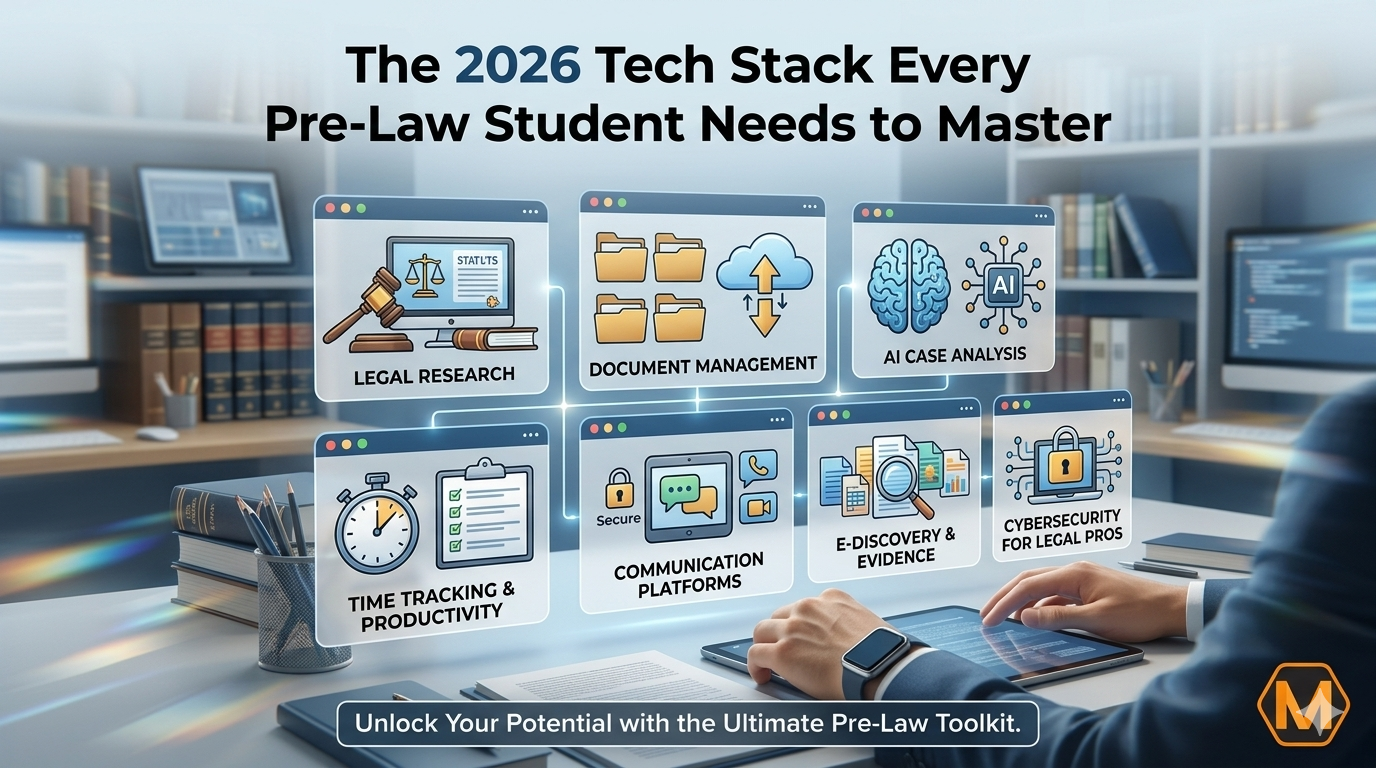
The journey to a Juris Doctor (JD) in the United States has undergone a tectonic shift. As we navigate 2026, the traditional “pen and paper” or even the basic “laptop and Word” approach is no longer sufficient for the modern pre-law student. With the American Bar Association (ABA) and top-tier law schools like NYU and Stanford integrating “Agentic AI” and “Computational Law” into their core expectations, students must arrive on campus with a pre-built digital arsenal. cloudysocial, logicalshout, Immorpos35.3, feedworldtech, thestripesblog, mygreenbucks, designmode24, wtgtechgeek, uploadblog.
For those aiming for Big Law or prestigious clerkships, the competition starts long before the LSAT. Mastery of a specific tech stack is now the “minimum viable product” for any serious candidate. However, as standards for original analysis tighten under new academic integrity frameworks, many find that technology alone isn’t enough to bridge the gap between a good argument and a winning one. This is why seeking expert law essay writing help has become a strategic move for students looking to refine their IRAC (Issue, Rule, Analysis, Conclusion) formatting while mastering these new digital tools.
1. The Research Powerhouse: Lexis+ AI & Westlaw Precision
In 2026, “Boolean searching” is a relic of the past. The current standard is natural-language, AI-assisted research.
- Lexis+ AI: This tool now features 17% lower hallucination rates than general-purpose AI, providing source-grounded answers from verified legal databases.
- Westlaw Precision: Essential for U.S. litigation research, this tool uses “Precision Research” to filter cases by specific legal issues, outcome, and fact pattern with over 90% accuracy.
Pre-law students who can demonstrate proficiency in these platforms—specifically in verifying AI-generated citations—are significantly ahead of their peers. If the workload of managing these sophisticated research tools alongside a full undergraduate schedule becomes overwhelming, it is common for students to pay someone to do assignment tasks related to lower-level coursework, allowing them to focus specifically on mastering high-level legal tech.
2. The Writing & Citation Suite: Bluebook 22 & Grammarly Legal
Proper citation is the “EEAT” (Experience, Expertise, Authoritativeness, and Trustworthiness) of the legal world.
- Bluebook Online (22nd Edition): The digital version now integrates directly with Google Docs and Word, auto-formatting citations in real-time.
- Grammarly for Law: A specialized 2026 update that checks for “legalese” vs. plain language, ensuring your writing meets the modern court standards of clarity and conciseness.
3. The Organization Hub: Notion for Law & Clio Grow
- Notion: Specifically used for “Case Briefing Databases.” In 2026, students use custom Notion templates to link case facts to specific legal principles across multiple classes.
- Clio Grow: While primarily a firm management tool, many pre-law internships now require students to understand “Matter Management.” Learning the basics of intake and document automation through Clio is a major resume booster.
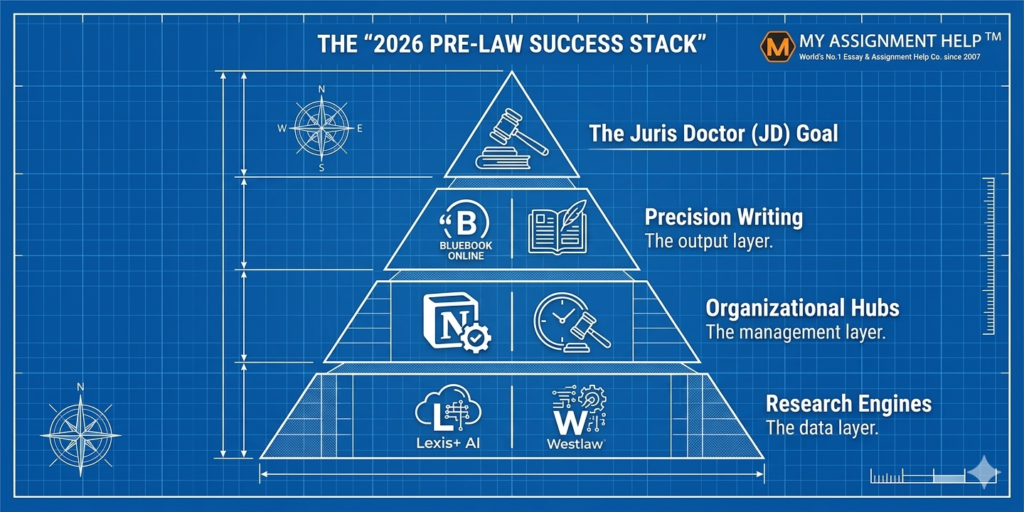
The 2026 Pre-Law “Survival” Tech Stack
| Category | Recommended Tool | Core Benefit |
| Legal Research | Lexis+ AI | Verifiable case law summaries |
| Citation | Bluebook Online | Real-time US legal formatting |
| Drafting | CoCounsel | AI-assisted document review |
| Productivity | Notion | Relational databases for case briefs |
| Integrity | Turnitin Authorship | AI-human content verification |
Key Takeaways for 2026 Success
- Verify, Don’t Just Trust: AI hallucinations in legal research still exist (estimated at 17-34% in 2026). Human oversight is non-negotiable.
- Master the “IRAC” Prompt: Learning how to prompt AI to structure arguments in the IRAC format is a core competency.
- Prioritize E-E-A-T: Admissions boards now look for “Experience” and “Trustworthiness” in writing, which requires a blend of tech-assisted research and human-led original analysis.
Frequently Asked Questions (FAQ)
Q1: Is using AI for law school essays considered plagiarism in 2026?
A: Most U.S. law schools now use “Authorship Verification” tools. While using AI for research and outlining is often encouraged, submitting AI-generated prose as your own is a violation of academic integrity. The key is using AI as a “co-pilot,” not the “pilot.”
Q2: Which citation style is most important for U.S. pre-law students?
A: The Bluebook remains the gold standard for all U.S. legal writing. Mastery of both the “Bluepages” (for practitioners) and “Whitepages” (for academic journals) is essential.
Q3: Can I really get a job just by knowing these software tools?
A: Technology is a “force multiplier.” Firms in 2026 are looking for “Hybrid Operators”—lawyers who have both the legal judgment and the technical skill to use AI agents effectively.
About the Author
James R. Sterling, Senior Content Strategist at MyAssignmentHelp
James has over 12 years of experience in the U.S. legal-academic sector. Specializing in the intersection of legal technology and student success, he helps JD candidates navigate the complexities of modern legal writing. He is a frequent contributor to digital marketing and educational strategy forums, focusing on maintaining E-E-A-T standards in an AI-driven academic landscape.
References:
- ABA Task Force on Law and Artificial Intelligence, 2026 Report.
- Clio Legal Trends Report 2026.
- Stanford Legal Design Lab: The Evolution of Pedagogy (2025-2026).