Content demand has exploded across platforms, forcing brands to produce more videos than ever before. From social media snippets to long-form storytelling, the pressure to stay visible and relevant has made traditional production workflows increasingly inefficient. Teams that once relied on lengthy shoots and heavy post-production cycles are now turning to AI-powered tools to meet these demands with speed and consistency.
In this shift, runway AI video has emerged as a powerful approach for transforming how content is created, edited, and distributed. Combined with platforms like Invideo, which integrate advanced capabilities such as video-to-video editing, object manipulation, and scene relighting through text prompts, brands are finding new ways to scale output without proportionally increasing effort or cost.
This evolution isn’t just about automation; it’s about redefining creative workflows. AI enables faster experimentation, rapid iteration, and the ability to produce high-quality visuals at scale, all while maintaining creative control.
The Shift from Traditional Production to AI-Driven Workflows
Why Traditional Video Production Struggles to Scale
Traditional video production is resource-intensive. It involves planning, scripting, shooting, editing, and multiple review cycles. While this process works for high-budget campaigns, it becomes a bottleneck when brands need to produce content daily.
Some key challenges include:
- High production costs
- Long turnaround times
- Limited flexibility for quick edits
- Dependency on large teams
As content consumption grows, these limitations prevent brands from keeping up with platform demands, especially in fast-paced digital ecosystems.
The Rise of AI in Content Creation
AI-driven video tools are changing this landscape by automating complex tasks. Instead of reshooting scenes, creators can now modify visuals directly using text-based instructions. This reduces dependency on physical production and allows teams to focus more on storytelling and strategy.
AI also enables:
- Faster content iteration
- Scalable video output
- Real-time editing adjustments
- Consistent branding across formats
This shift is not about replacing creativity; it’s about enhancing it with speed and efficiency
Scaling Content with Runway AI Video and Invideo
How Runway AI Video is Transforming Production
The integration of runway AI video into modern workflows has introduced a new level of creative flexibility. Instead of treating video editing as a rigid process, brands can now experiment dynamically with visuals.
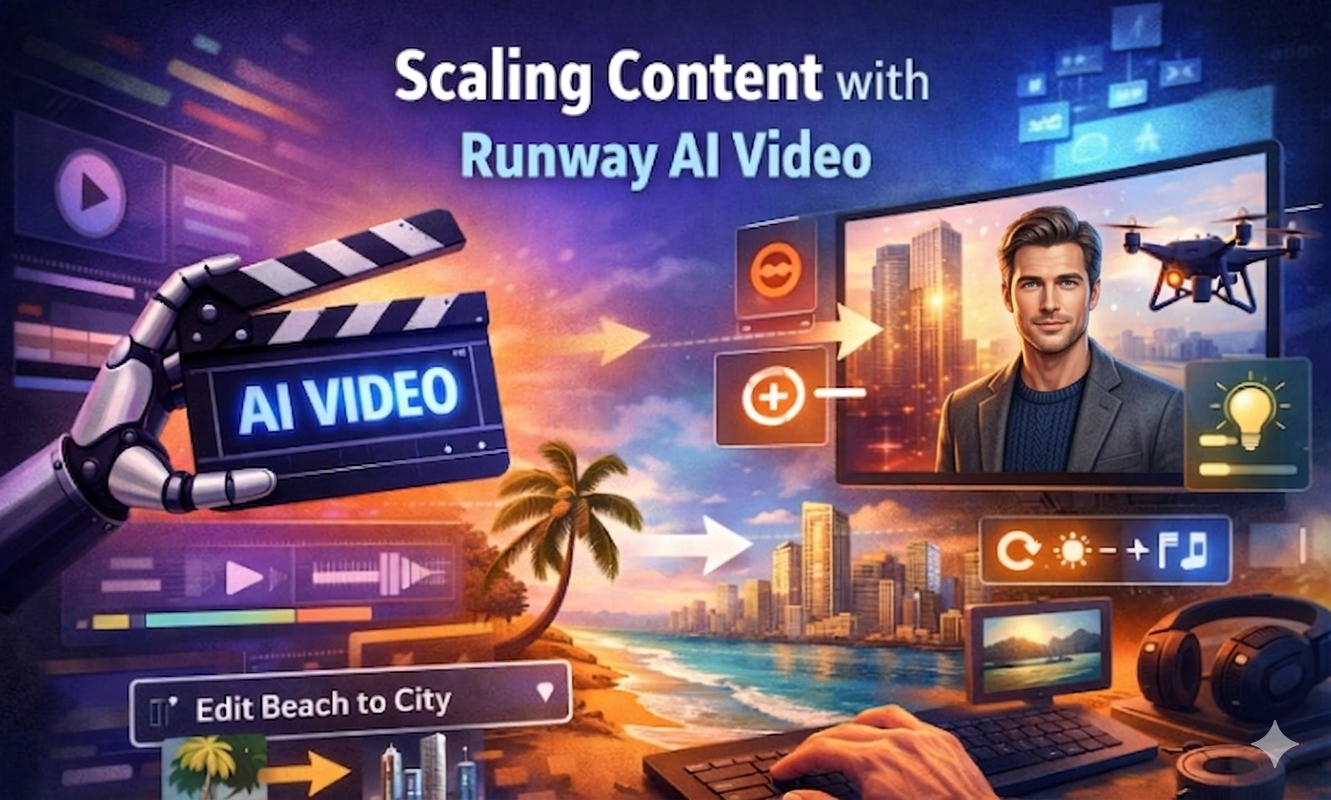
When paired with Invideo, this becomes even more powerful. The platform enables precise video-to-video editing, allowing creators to:
- Add or remove objects seamlessly
- Change camera angles without reshooting
- Relight scenes using simple text prompts
- Transform existing footage into entirely new visuals
This means a single piece of content can be repurposed into multiple variations, each tailored for different audiences or platforms.
From One Video to Many: Multiplying Output
One of the biggest advantages of AI-driven workflows is content multiplication. A single shoot can generate:
- Short-form clips for social media
- Product-focused edits
- Story-driven variations
- Region-specific versions
Instead of starting from scratch each time, brands can build on existing assets, drastically reducing production time while increasing output.
The Role of AI Video Apps in Modern Marketing
The emergence of the AI video app ecosystem has made advanced video creation accessible to a wider range of teams. What once required specialized skills can now be handled by marketers, content strategists, and even small teams without dedicated production units.
These tools empower brands to:
- Create videos directly from text inputs
- Edit visuals without technical expertise
- Adapt content quickly for trends
- Maintain consistency across campaigns
By lowering the barrier to entry, AI video apps enable organizations to scale content without scaling complexity.
Key Use Cases for AI-Driven Video Scaling
Social Media Content at Scale
Social media platforms demand constant content. AI tools allow brands to quickly generate multiple variations of the same idea, ensuring they stay active without overburdening teams.
Examples include:
- Daily short-form videos
- Trend-based adaptations
- Platform-specific edits
Performance Marketing Campaigns
Performance marketing relies heavily on testing. AI enables brands to create multiple ad variations quickly, helping them identify what resonates best with their audience.
This includes:
- Different hooks and intros
- Visual variations
- Audience-specific messaging
Product Demonstrations and Explainers
AI-driven editing allows brands to update product visuals without reshooting. This is especially useful for:
- Feature updates
- Seasonal campaigns
- Localization
Content Repurposing
Instead of letting old content sit unused, brands can transform it into new formats. AI makes it easy to:
- Convert long videos into short clips
- Update visuals for relevance
- Refresh older campaigns
Creative Control vs Automation: Finding the Balance
Maintaining Brand Identity
One concern with AI-generated content is the potential loss of brand identity. However, when used correctly, AI enhances consistency rather than diminishing it.
Brands can maintain control by:
- Defining visual guidelines
- Using consistent prompts and styles
- Reviewing outputs before publishing
Enhancing Creativity, Not Replacing It
AI doesn’t replace creative thinking; it accelerates execution. Teams can focus more on ideation while AI handles repetitive tasks.
This leads to:
- Faster experimentation
- More creative variations
- Better storytelling opportunities
Challenges Brands Face When Scaling with AI
Learning Curve and Adoption
While AI tools are powerful, they require an initial adjustment period. Teams need to understand how to:
- Write effective prompts
- Use editing features efficiently
- Integrate AI into existing workflows
Quality Control
Scaling content quickly can lead to inconsistencies if not managed properly. Brands must establish review processes to ensure quality remains high.
Over-Reliance on Automation
Relying too heavily on AI can lead to generic content. The key is to combine AI efficiency with human creativity to maintain originality.
Best Practices for Scaling Content with AI Video
Start with a Strong Content Strategy
AI is only as effective as the strategy behind it. Brands should define:
- Content goals
- Target audience
- Platform-specific requirements
Build a Modular Content System
Instead of creating standalone videos, brands can design modular assets that can be reused and recombined.
This includes:
- Reusable visuals
- Adaptable scripts
- Flexible formats
Iterate and Optimize Continuously
AI enables rapid testing, so brands should:
- Analyze performance data
- Refine content based on insights
- Continuously improve output
Combine Human Insight with AI Efficiency
The most successful workflows blend:
- Human creativity
- AI-powered execution
- Data-driven decision-making
The Future of AI-Driven Video Scaling
The role of AI in video production will continue to grow as Benefits technology evolves. Future advancements are likely to include:
- More realistic video transformations
- Greater control over visual elements
- Improved personalization at scale
Brands that adopt these tools early will be better positioned to adapt to changing content demands.
Conclusion
Scaling video content is no longer just about increasing output—it’s about doing so intelligently. AI-powered tools have made it possible for brands to produce more content, experiment faster, and adapt quickly to changing trends.
By leveraging technologies like runway ai video alongside platforms such as Invideo, brands can transform their workflows from linear and resource-heavy to dynamic and scalable. The ability to edit, adapt, and repurpose content using simple prompts unlocks new levels of efficiency without compromising creativity.
As the demand for video continues to grow, the brands that succeed will be those that embrace AI not as a shortcut, but as a strategic advantage—one that enables them to create smarter, faster, and more impactful content.